Choosing the colour: 22 foils, 18 RAL shades, and one decision that matters more
Anthracite is the default for a reason, dark doors are less risky than they used to be, and the finish on the handle changes the door more than most people expect.
Written by the Kilgate Doors team, with figures from the manufacturer's documentation and our installer's practice.
Czytaj po polsku →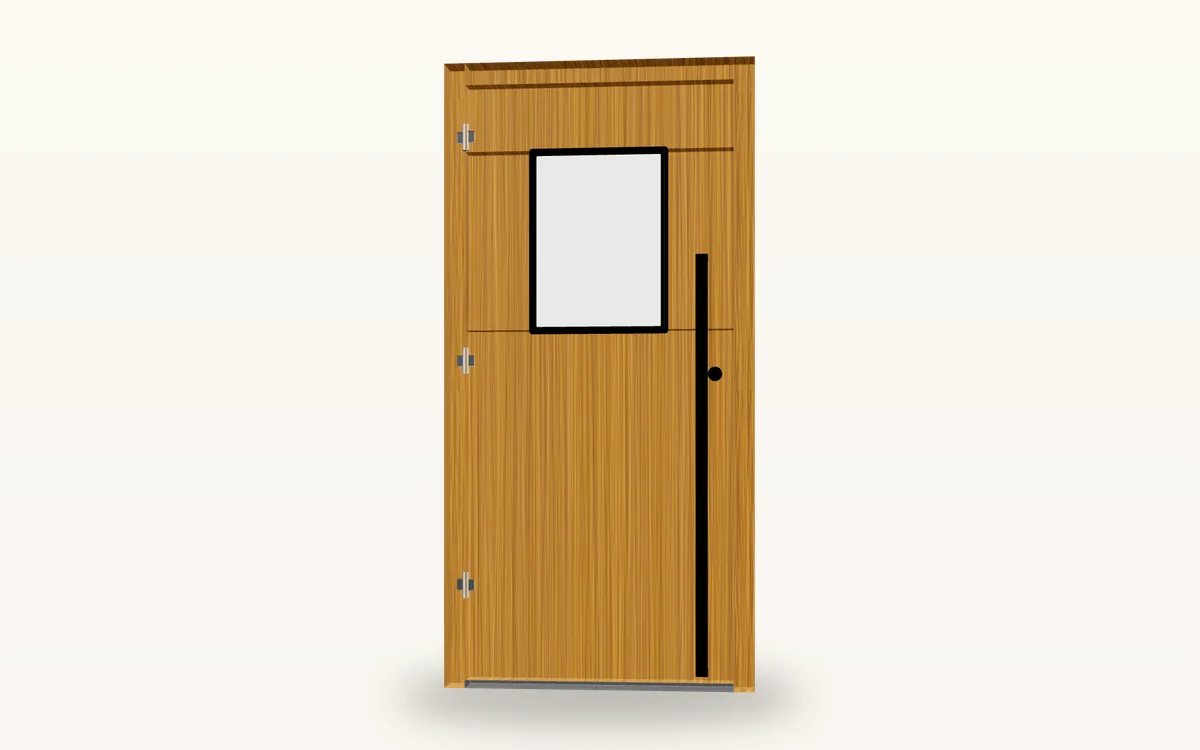
There are 53 colours available on these doors, which is 52 more than most people want to think about. So here is the short path through it.
The three tiers
22 foils, no extra charge. Woodgrains, greys, greens, a deep red, several whites. These are the everyday range and they cover most of what gets fitted in Ireland.
18 RAL shades, semi-matt. The full painted range, if you are matching something specific: window frames, a rendered colour, a house style. Priced on request.
13 metallic finishes. Anodised-look and structured metallics. Also priced on request.
You can also have a different colour inside than outside, which is worth knowing. A charcoal door on the street and a white door in the hall is a common and sensible combination, because the inside of a front door lives in a much smaller, darker space than the outside does. That works between foils, for €100. A painted door (RAL or metallic) is painted on both sides: the manufacturer does not make a painted outside with a foil inside, and a different RAL inside is a special quote.
Dark colours are less risky here than they used to be
The old warning about dark front doors was about plastic. A dark uPVC leaf in direct sun gets far hotter than the surrounding air, and plastic moves when it gets hot. That is where the folk wisdom comes from.
Our leaf is a polyurethane core with a steel skin in an aluminium frame. Steel and aluminium expand too, but predictably and far less than plastic does, and the colour is a foil bonded to steel rather than a wrap on a hollow extrusion. Anthracite on a south facing elevation is a normal specification, not a gamble.
That said, the darker the colour, the more visible every mark. A black door shows dust, pollen and rain spotting in a way that a mid grey does not. If the door faces a road or a farm lane, half a tone lighter will look cleaner for longer.
Texture
Some foils are smooth, some are textured, a fine grain you can feel. Textured finishes hide handprints and small marks noticeably better, and they photograph darker than the swatch. Smooth finishes look sharper on a flush modern door and worse on anything with a deep milled pattern.
The decision that changes the door most
Not the colour. The hardware finish.
Silver is standard. Black is €100, and it changes more than the handle: the frame around the glazing follows the same finish. So a black-hardware door has a black bead outlining every piece of glass, which reads as a deliberate graphic line across the front of the house. Silver hardware on the same door reads as quieter and more traditional.
Look at both in the configurator before deciding on colour, because the two choices interact. Black hardware on a light grey door is a strong contemporary look. Black hardware on a dark brown woodgrain mostly disappears.
Glass
Three glass types carry no surcharge: clear, milk (obscured, for privacy) and reflex brown. The extras are one-way mirror, printed glass, reflex graphite and black, at €100 each.
One warning about one-way mirror, because it is the option people fall for fastest: it is charged per element. A door with two sidelights in mirror glass is three elements, not one. And it works by being brighter outside than in, which means at night, with the hall light on, it works in reverse. It is excellent on a bright hallway you want to keep private in the day, and it is not a security feature.
Printed glass (a house number, a name, a pattern) is €100 and is the single cheapest way to make the door look bespoke rather than catalogue.
A practical rule
Match the window frames, not the walls. Walls get painted every few years and the render colour changes with them. Window frames stay for decades, and a front door that fights the windows will look wrong on every photograph of the house for as long as both are in place.
If the windows are white, almost anything works. If they are anthracite, use anthracite or go deliberately, confidently different: a deep green or a warm woodgrain. The one thing that never quite works is nearly the same.