Will a new front door actually move your BER rating?
SEAI makes you book a BER assessment after a new front door goes in, and it is easy to assume the letter on the cert is about to jump. It almost never does on a door alone, and here is the honest reason why.
Written by the Kilgate Doors team, with figures from the manufacturer's documentation and our installer's practice.
Czytaj po polsku →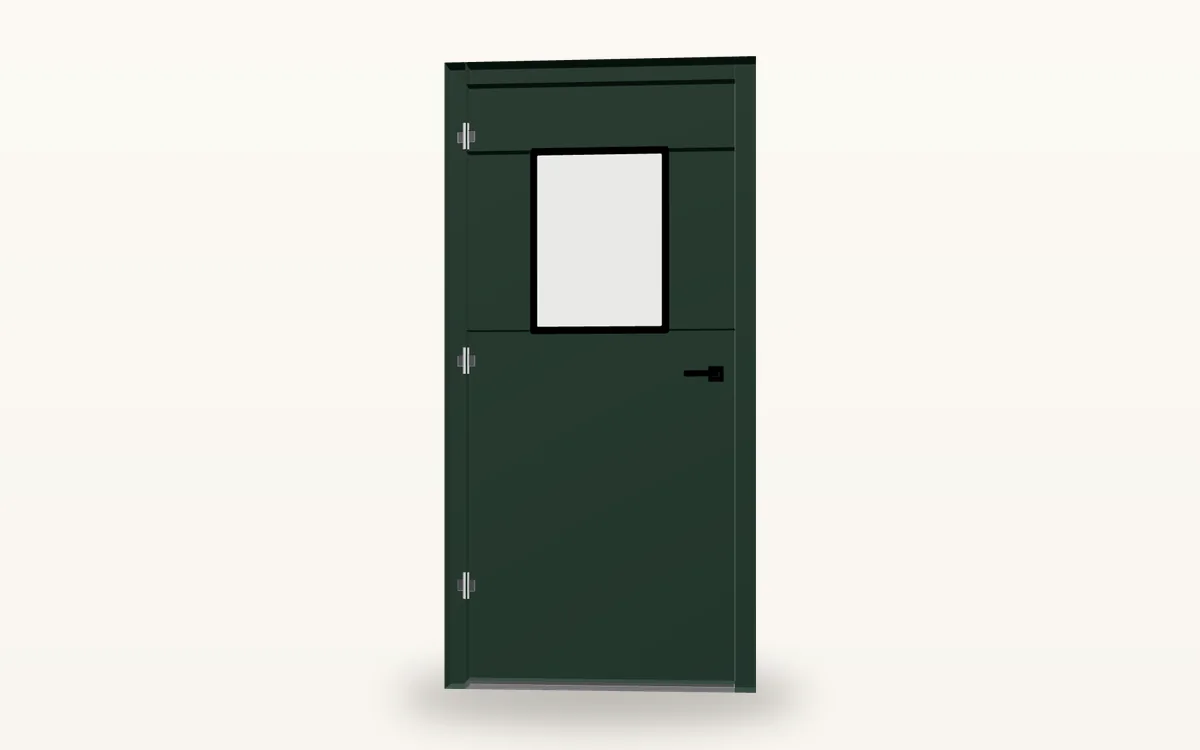
Every SEAI door grant claim needs a post-works BER assessment, and the question that comes with it is almost always the same: does this mean the rating on my cert is about to go up a letter? The honest answer, for a door on its own, is almost certainly not. Here is what the BER actually measures, why the door barely touches it, and what you are really paying for when you book that assessment.
What a BER assessment actually checks
A Building Energy Rating is a calculation of the whole dwelling, not a scorecard for any single product in it. The assessor (or the methodology behind the cert) looks at the entire building envelope together: walls, roof, floor, windows, doors, the heating and hot water system, ventilation and airtightness, and rolls all of it into one figure, then one letter from A to G. A front door is one input into that calculation among dozens.
That matters because people naturally picture it the other way round, as if the BER were graded component by component and a new door earns a tick in its own box. It does not work like that. Change the door and you change one line in a much larger sum.
Why one door barely moves the total
A typical front door, frame included, is around 2.2 m². Walls and roof, by comparison, are the surfaces a typical Irish house loses the most heat through, simply because there is so much more of them. We did the arithmetic on the door's own U value here: swapping an old 1980s timber or early uPVC door (roughly 3.0 W/m²K) for a new glazed 72 ARKTIC ALU door (declared at ≤1.1 W/m²K, ≤0.89 solid) is a real improvement on that one opening. But it is an improvement applied to a very small share of the house's total heat-losing surface. A calculation that weighs the whole envelope is never going to swing a letter grade on the strength of 2.2 m² alone, however good the new number is.
This is the same honesty we apply to the money side of the U value: the door is worth replacing for the draught, the lock and the look, not because the arithmetic on heat loss adds up to much. The BER tells the same story from a different angle.
Why SEAI still insists on the assessment
The post-works BER is not there to flatter the door. It exists for two practical reasons.
It documents that the works actually happened and meet specification. The product certificate from the installer states the U value of the door that was fitted. The BER, ordered separately and part-funded by SEAI, is the independent record that sits alongside it in your claim.
It checks the whole-house condition the scheme actually cares about. The grant's technical condition is a Heat Loss Indicator of 2.3 or lower after the works, and that figure is driven mostly by the walls and the attic, not by the door. As we have written for landlord and portfolio claims, a property starting from poor wall and attic insulation will not cross that line on a new door by itself, grant or no grant.
Neither reason has anything to do with nudging your cert from a D2 to a C1. SEAI wants proof the right door went in and that the house, overall, still clears its threshold. The letter on the front page is a side effect of the calculation, not the target of it.
What the door does change, even when the letter does not
| Before | After | |
|---|---|---|
| BER letter grade | Unlikely to move on a door alone | Unlikely to move on a door alone |
| Draught at the door | Present, worse in wind | Gone |
| Air permeability | Old seals, variable | Class 4, the top of the scale under EN 12207 |
| Heating cost from the door itself | A genuinely small number | Smaller still, and still small |
The real, feelable change is comfort: no draught across the hall floor, a door that still shuts with one push in ten years, a lock you trust. None of that shows up as a jump on the certificate, and none of it needs to, because that was never the reason to buy the door in the first place.
When it might actually move
If the door is one part of a bigger round of works, new windows at the same time, attic insulation, a heat pump, the cumulative effect across the whole envelope is a different proposition, and that is where a visible shift in letter grade becomes realistic. A door replaced on its own, in a house that is otherwise unchanged, is not that case.
The honest reason to still get the BER done properly
Beyond the paperwork SEAI requires, a current BER is a genuinely useful document. It tells you, in order, where the next real improvement in the house actually lives, which for most Irish houses built before 2011 is the attic and the walls, not the front door. If you are planning further upgrades, read the advisory report that comes with the cert before you decide what to do next.
The short version
A new front door is very unlikely to shift your BER letter grade by itself, and that is not a flaw in the door, it is how the rating is built: one small opening in an envelope dominated by walls and roof. The post-works assessment is mandatory because it proves the job was done to specification and checks the whole-house condition the grant actually cares about, not because it exists to reward the door. Buy the door for the draught, the lock and the look, and let the BER tell you honestly what to upgrade next.
If you want to see the actual door before any of this, build it in the configurator, or book a free WhatsApp video measurement and ask us to walk through how the SEAI paperwork, including the BER, fits around your own installation date.